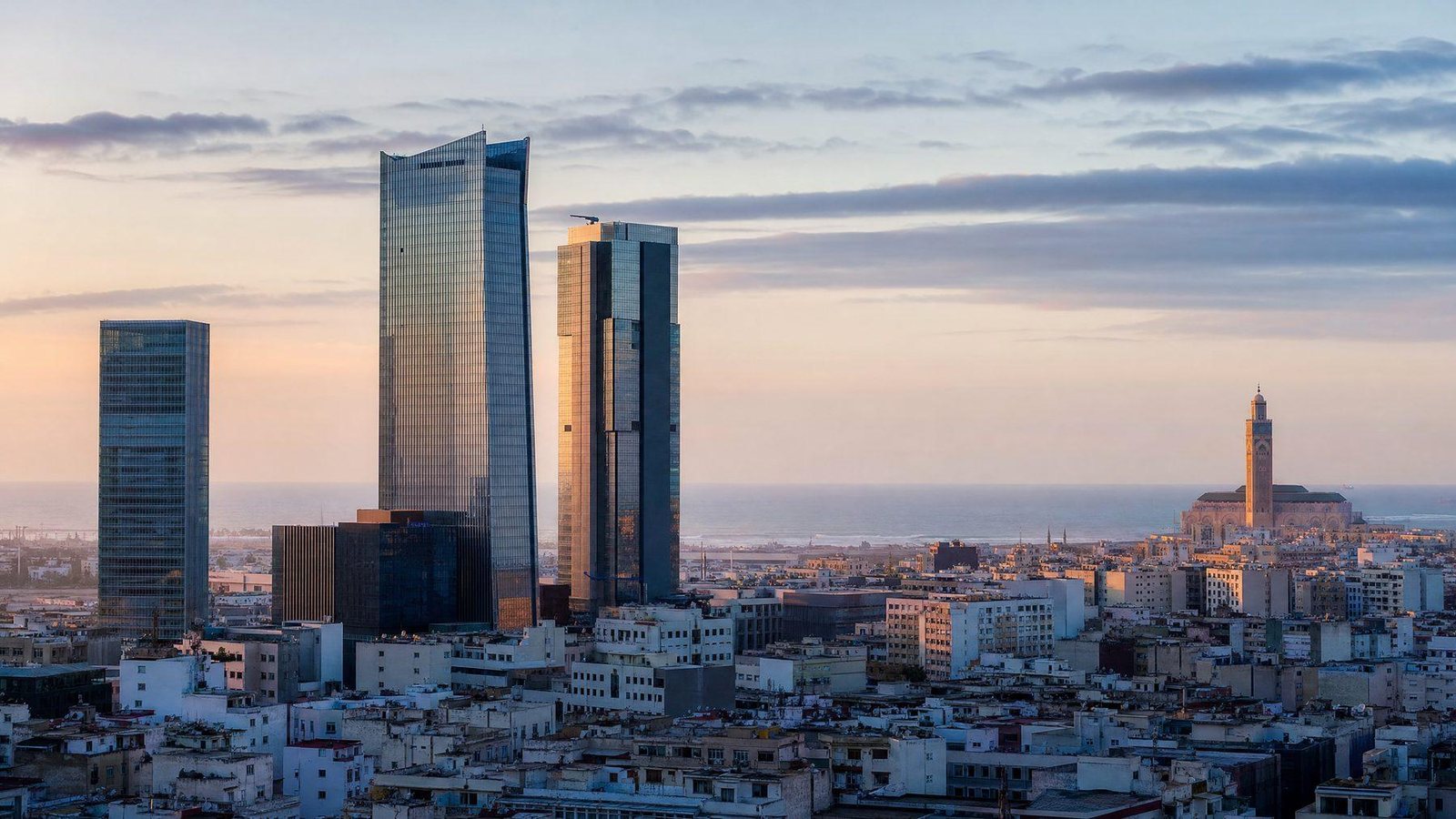
Long seen as an expansion market, Morocco is establishing itself as a base for deployment into Africa. For European companies, the question is now how to orchestrate, from Casablanca, growth across several markets.
For years, European companies looked at Morocco as a destination: a nearby, dynamic, French-speaking market.
That view is outdated. Morocco has become a base from which to organise one’s presence on the continent. Its ports, banks, innovation, operators and talent are already established there.
Geography, however, does not make a strategy. What sets apart the companies that succeed in their African expansion is their ability to link markets, teams, data and tools, a digital topic before it is a real estate one.
1. A gateway that is already equipped
Morocco’s infrastructure and networks are already in place.
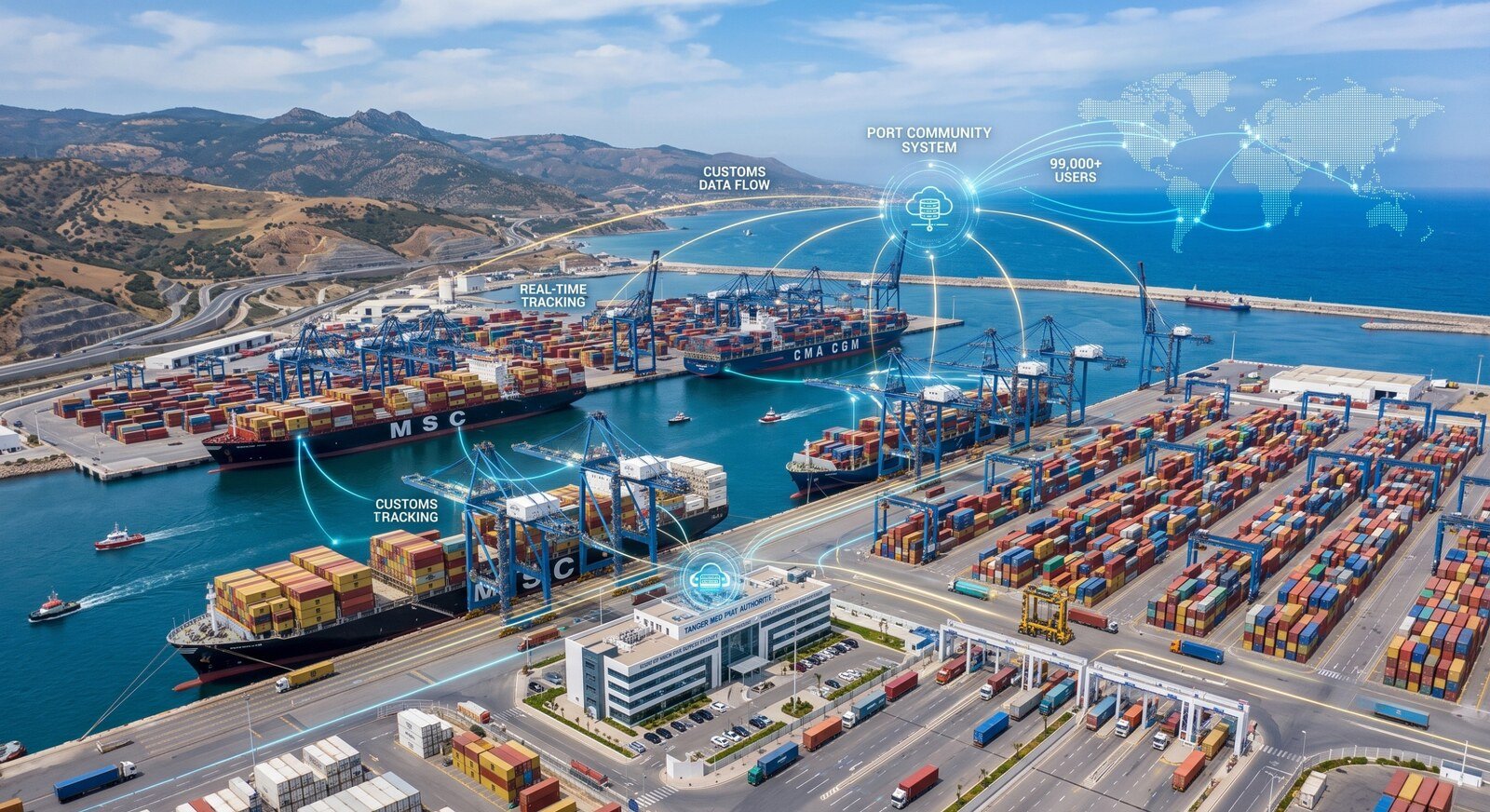
- Logistics. Tanger Med handled more than 11.1 million containers (TEU) in 2025, up 8.4% year on year (TelQuel). The port has become one of the major crossing points between Europe, Africa and global shipping routes.
- Finance. Three Moroccan banks rank among the ten most influential in Africa in 2025. Bank of Africa operates in 20 countries on the continent, Banque Centrale Populaire in about a dozen (APA News). Many relays for payments, financing and local introductions.
- Talent. With Digital Morocco 2030, launched in September 2024, the State aims for 240,000 jobs in digital and the training of 100,000 young people a year by 2030 (Médias24).
One nuance is needed: Africa is a mosaic of markets. Rules, languages, payment methods, buying habits and logistics change from one country to another. Morocco does not erase these differences, but it offers a solid foothold to tackle them one by one.
2. The real challenge: running the business across several countries
Opening an office or signing a distributor is only the first step. The difficulties begin when you have to run the business across several markets at once.
- Payments: bank card, mobile payment, cash on delivery, habits vary from one country to another.
- Logistics: delivering between two African countries can take longer, and cost more, than delivering from Europe.
- Regulations: taxation, customs, data protection, product registration: each country has its own requirements.
- Steering: without reliable, centralised data, it is impossible to measure profitability by market, anticipate stock-outs or arbitrate investments.
Digital solves a large part of these issues, provided you design the right systems and connections: a commercial platform open to local payments, order management linked to logistics partners, sales and finance tools that talk to each other, a dashboard that gives management a consolidated view without erasing local realities.
Technology replaces neither partners on the ground nor knowledge of the markets. It makes the whole consistent, measurable and repeatable. Digital makes international expansion manageable.
3. France, Southeast Asia, Morocco: building the right team
digital sourcing rests on a simple principle: bringing together the most relevant skills, wherever they are, around a single objective. The aim is to draw on what each ecosystem does best, beyond cost reduction. Three zones complement each other.
| Zone | What it brings |
|---|---|
| France | Strategy, sector expertise, organisational structuring, regulatory culture |
| Southeast Asia (Singapore, Bangkok, Ho Chi Minh City) | Lead in mobile usage, digital payment and e-commerce (super apps, fintech); technical skills and innovation |
| Morocco | European proximity, French-speaking talent, knowledge of African markets, regional coordination |
Take a French company that wants to grow its online sales in West Africa. It designs its strategy and offer in France. It draws on Southeast Asian mobile commerce models and mobilises some technical skills there. It sets up regional coordination, customer support and market adaptation in Morocco.
The goal is to bring together the best combination of skills around a real need, with clear governance, controlled costs and cybersecurity up to the task.
What the field has taught us. Our experts led the digital transformation of an airline group in the UAE across 35 markets in the Middle East and Africa. Beyond technology, the difficulty lay in governance (who decides, for which country), the quality of shared data, and the art of adapting a common model without imposing it as is everywhere.
4. From a local presence to a platform
A conventional local presence creates a structure to serve one country. A platform pools certain functions to serve several: commercial coordination, customer support, data, financial steering, digital projects, logistics operations. Morocco can host them, while each country keeps its own adaptations.
There is no need to build everything at once. Four questions are enough to get started.
- Which markets, in what order? One or two test countries to validate hypotheses, then a gradual extension.
- Which functions to pool in Morocco? Those that benefit from being centralised without distancing the company from its local customers and partners.
- Is your digital ecosystem ready? Local payments, orders, CRM, ERP, WMS, data, BI: what works, what must be connected, what is missing.
- Who decides what? The roles of headquarters, the regional team and local players. Without this clarity, even the best tools lose their effectiveness.
One principle guides the rest: start from needs, never from tools. A complex ERP where a lightweight solution would do is expensive and slows the organisation. A standard platform that ignores local practices will not be adopted. The right model combines what exists when it is relevant and custom development when the need justifies it.
The right question is “How do I make my business work across several markets at once?” Morocco offers a solid foothold to answer it.
The Digital Pulsing view
A successful international strategy starts from the company’s operational needs, never from a list of tools.
Our experts live and work in Lyon, Casablanca, Dubai, Bangkok, Singapore and Ho Chi Minh City. This presence at the crossroads of several ecosystems lets us spot complementarities between your markets, mobilise existing skills and partners when they add value, and develop custom solutions when necessary.
Our conviction: succeeding in your digital transformation means connecting the right resources to the right needs.
Considering Africa from Morocco? Before choosing your markets, platforms or partners, make sure your digital organisation is ready to follow. Assess your digital maturity in 2 minutes, or talk for 30 minutes with one of our experts in Casablanca to define your first priorities.
Free, in 2 minutes, instant result
Sources
- Tanger Med passes the 11 million container mark in 2025, TelQuel, 2 February 2026
- Banks: three Moroccan institutions among the ten most influential in Africa, APA News, 17 July 2025
- Digital Morocco 2030: MAD 11 billion allocated between 2024 and 2026, Médias24, 25 September 2024